Tool, Threat, or Opportunity?
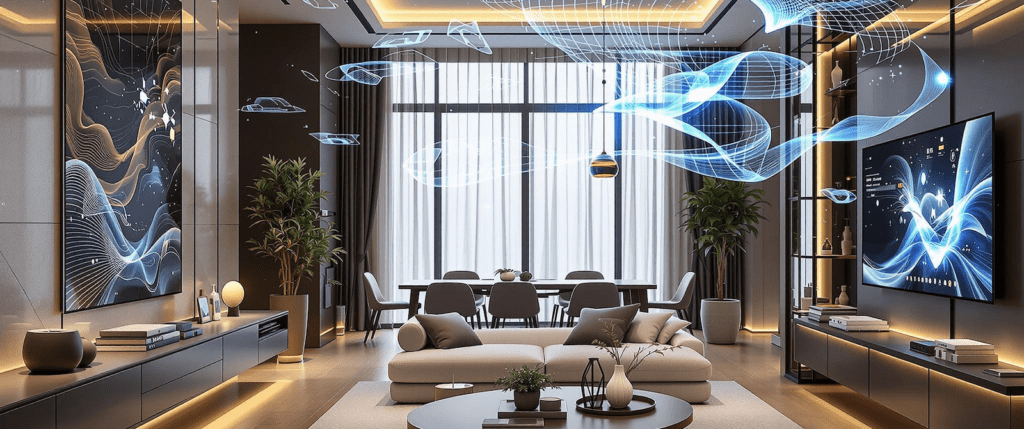
Artificial intelligence is rapidly becoming part of the design process—reshaping how architects and designers think, create, and work. From generating concepts to optimizing layouts and visualizing ideas in seconds, AI is no longer a distant concept. It is already present in studios, quietly transforming workflows and expectations. But with this shift comes an important question:
Is AI replacing designers—or redefining their role?
The Influence of AI on Design
AI is not just a tool for speed—it is a tool for exploration. Today, it can generate multiple design variations in seconds, assist in space planning and optimization, produce realistic visualizations instantly, and analyze environmental and performance data. This allows designers to move faster in early stages and test ideas that would otherwise take much longer.
However, AI does not “design” in the human sense—it processes data, patterns, and references. The intention, meaning, and narrative still come from the designer.
Will Designers Lose Their Jobs?
This is one of the most common concerns—and also one of the most misunderstood. AI will not replace designers, but it will change what is expected from them. Tasks that are repetitive or about technical may become automated.
But design is not only about production—it is about:
- Understanding people
- Interpreting context
- Making decisions with intention
These are human qualities that AI cannot replicate. What is more likely is a shift: less time spent on execution and more time focused on concept, strategy, and creativity. Designers who adapt will not be replaced—they will become more powerful.
Using AI be a Smart Way
The key is not to resist AI but to use it intentionally. AI should be:
- A starting point, not the final result
- A tool for exploration, not a replacement for thinking
- A support system, not the author of the project
Used correctly, it can expand creativity, save time in early phases, and improve communication with clients. But the designer remains the one who gives direction, meaning, and coherence.
The Future of Design
We are entering a moment where technology and creativity are top-level intertwined. The role of the designer is evolving—from someone who produces to someone who curates, directs, and defines. In this context, the value of design becomes even more human emotions, experience, and story.
AI will not replace design.
But it will challenge designers to be clearer, more intentional, and more thoughtful than ever before.
Because in a world where anything can be generated—
what truly matters is why it is created.


