
How intelligent systems are changing the way we live, manage and design our homes
A home is no longer simply a collection of rooms, furniture and appliances. As technology develops, it is becoming an intelligent environment that can respond to the habits, preferences and daily routines of the people who live there.
This is the essence of a smart home: not a collection of gadgets, but a connected system designed to make everyday life more comfortable, secure and efficient. Artificial intelligence is also becoming increasingly important, allowing the home not only to follow commands but also to understand context, identify patterns and make automation easier to use.
Smart-home technology is not only a technical subject. It has a direct relationship with architecture and interior design because every intelligent solution needs to be planned, positioned and integrated into the space. When design and technology are developed together from the beginning, the result is a home that does not simply look beautiful—it works naturally for its occupants.
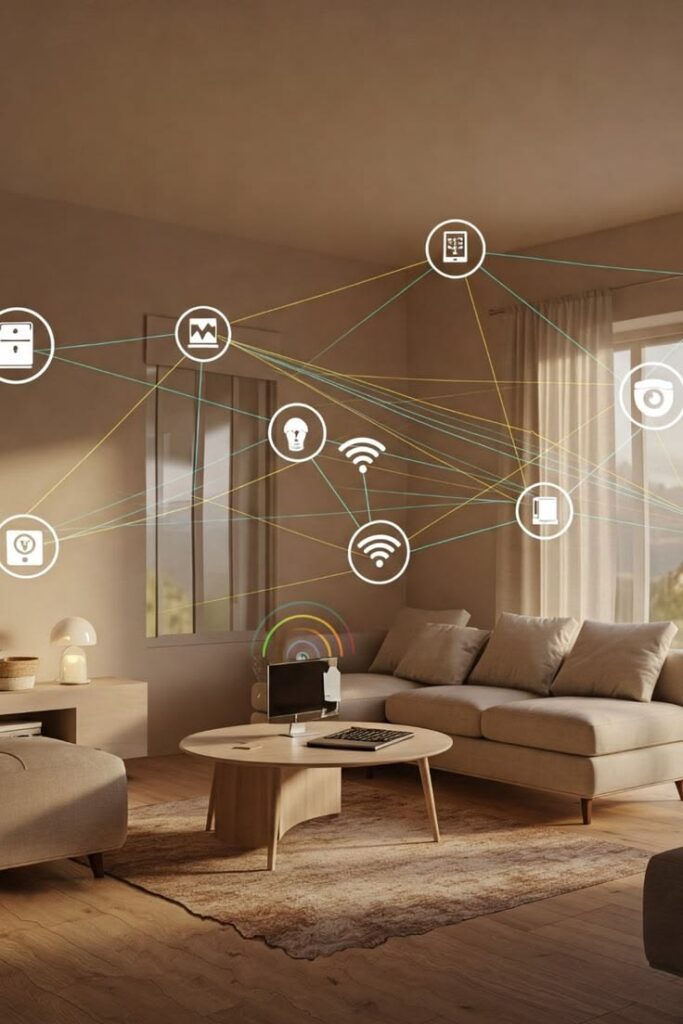
What Is a Smart Home?
A smart home is a residence in which different systems and devices are connected and can be controlled centrally or automatically. These may include lighting, heating and cooling, blinds and curtains, audio and video systems, appliances, cameras, sensors, access control and even electric-vehicle charging.
Control can take place through a mobile app, touchscreen, computer, remote control or voice command. More importantly, individual elements can work together through customised scenes.
For example, an “Away” scene could switch off the lights, lower the heating, close the blinds and activate the security system. An “Evening” scene might introduce soft indirect lighting, adjust the temperature and play a favourite playlist. In the morning, the blinds could open gradually while the lights and temperature change gently to support a more comfortable start to the day.
From Remote Control to an Intelligent Environment
Early home-automation systems relied mainly on fixed commands and schedules. Today’s solutions are much more flexible. Sensors can detect presence, movement, temperature, humidity, air quality and natural light, allowing the home to respond to real conditions.
Lighting can adapt to daylight and occupancy rather than simply switching on at a fixed time. Heating can provide different levels of comfort in the living room, bedroom and unused areas. Motorised blinds can reduce overheating in summer without unnecessarily darkening the interior.
Artificial intelligence extends these possibilities. Instead of memorising exact commands, users can communicate more naturally, combine several actions in one request and create automations more easily. Over time, the smart home can evolve from an environment that waits for instructions into one that anticipates certain needs—while keeping its occupants firmly in control.
How Does a Smart Home Influence Interior Design?
Intelligent systems change the way interiors are planned. Designers need to consider not only sockets, switches and wiring, but also sensors, control panels, motorised mechanisms, network equipment, built-in speakers and charging points.
Technology may become a visible part of the interior, or it may almost completely disappear within it. Sensors can be discreetly integrated, speakers concealed in walls and ceilings, curtain mechanisms hidden, and rows of traditional switches replaced by minimalist control panels or personalised scenes.
This reduces visual clutter and gives the designer greater creative freedom. At the same time, it requires careful planning before installations, ceilings and wall finishes are completed. When smart technology is added too late, it can lead to visible cables, unnecessary devices and compromises in the overall design.
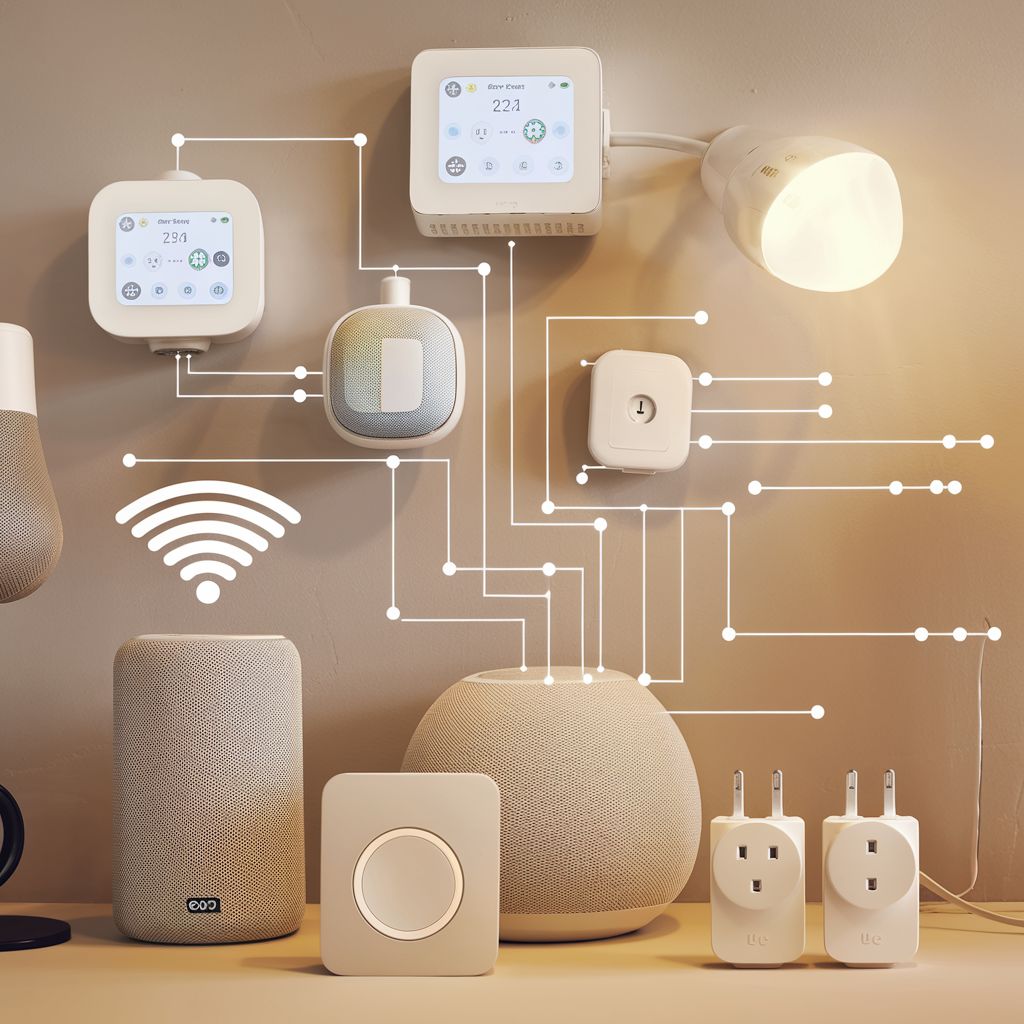
A Beautiful Smart Home Begins with Good Planning
The best results are achieved when the architect, interior designer, automation specialist and contractors work together from the beginning. The project should define which systems will be automated, how they will be controlled and which essential functions should remain available through simple physical controls.
Compatibility, security and privacy also matter. Devices should work reliably together, receive software updates and avoid unnecessary dependence on a single platform. A well-designed smart home should remain intuitive enough for a guest to use without instructions or a separate app for every action.
The Future of Interior Design Is Adaptive
Smart-home development is changing the very idea of interior design. A space is no longer a finished, static composition; it can become an environment that responds and adapts.
Artificial intelligence will help homes understand context, coordinate more systems and offer increasingly personalised experiences. Yet the best technology will remain the kind that does not constantly demand attention. It will work quietly in the background without displacing the people who live there or disturbing the visual harmony of the interior.
A smart home is not the opposite of a warm and welcoming home. When thoughtfully designed, it can make a space calmer, more beautiful and more responsive to its occupants. The goal is not to impress with the number of technologies but to create the feeling that light, temperature, security and atmosphere are always exactly as they should be.


